All things shakuhachi


Welcome to my website which covers all things shakuhachi. The shakuhachi is a Japanese bamboo flute. I teach, perform, and craft shakuhachi here in the mountains of Asheville, Western North Carolina. On this site I offer my shakuhachi for sale as well as my services as a performer and teacher of the shakuhachi. I also offer many free "how to" guides and videos like "how to play shakuhachi", "shakuhachi history" and more, all of which you can find in the shakuhachi Dojo. I can teach you shakuhachi in person or over the internet using live video chat via Skype, Google Voice, etc.

To find out more about shakuhachi, me and the shakuhachi I make, use the convenient "toggle boxes" below which open and close when clicked to display information.
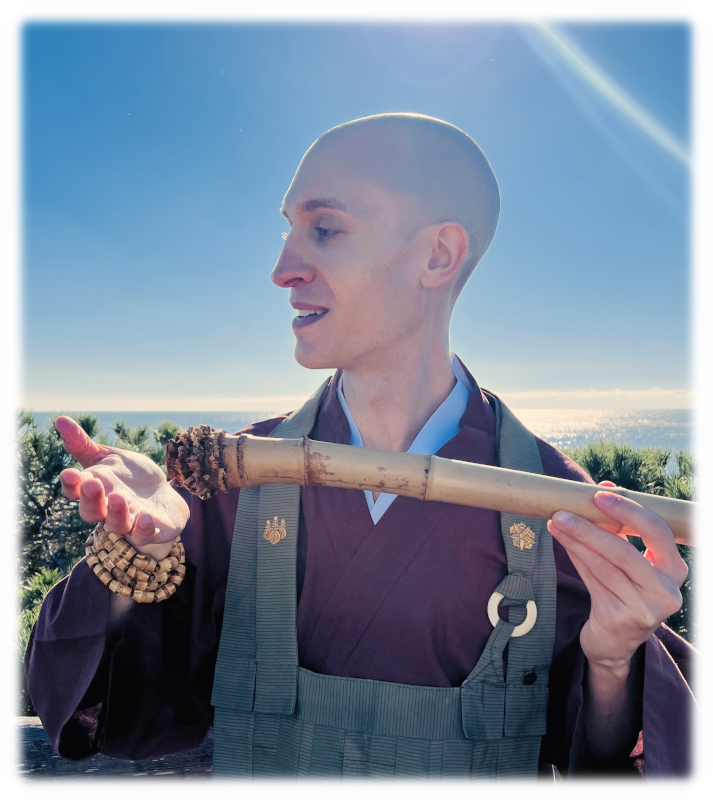
Me playing my shakuhachi in a madake bamboo forest and waterfall jon shakuhachi madake bamboo waterfall asheville north carolina

Performing shakuhachi

VIDEOS SOON!

I perform traditional Edo period Sankyoku ensemble music and Honkyoku solo music, newer Shinkyoku pieces such as Haru no Umi, and I am open to improvisation and ambient playing. Please contact me for more details.

Lessons for shakuhachi

VIDEOS SOON!

I teach in person or over the net using live video chat in private or group format. I can teach basic to advanced playing techniques, traditional music, bamboo harvesting and shakuhachi construction. I can also lecture on basic shakuhachi history as well as shakuhachi in The US.

What are shakuhachi and what makes shakuhachi unique

VIDEO SOON!

There is one question about shakuhachi that gets asked more than any other and that is, what makes shakuhachi unique. This question seems to also receive the most varied answers. Rather than go into shakuhachi history or folklore I prefer to show people what makes a shakuhachi unique as an instrument or rather what sets it apart from other flutes. First, shakuhachi are end-blown-flutes played with embouchure which means to direct a pressurized air stream at a sharp edge. There is no mouth-piece or fipple to direct the air-stream on shakuhachi. Fipple-flutes such as The Native American flute are easier than end-blown-flutes like the shakuhachi, however, the shakuhachi provides much more room for expression.

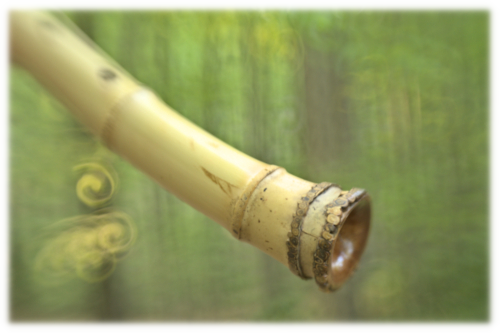
Shakuhachi only have five finger holes, a tone/fundamental/octave hole at the bottom end, and a hole at the top at the blowing edge or "utaguchi". However, shakuhachi players can access a dizzying array of notes and sounds that far exceed expectations. We are able to get all of these notes from the shakuhachi by slightly covering finger holes or combinations of finger holes, by moving our heads, and by adjusting our embouchure or "air-flow".

The term "bobble-head" comes up often when I demonstrate shakuhachi for people. It is this movement of the head that gives shakuhachi a large part of its soul. By moving the head down we get closer to the shakuhachi blowing edge which lowers the pitch. We also often match these head movements on the shakuhachi by adjusting or embouchure and by using a special finger positions such as covering 3/4ths of a finger hole. Additionally, we move our head in a number of motions to create vibrato and other sound effects. In short, it is the players ability to manipulate the shakuhachi with the breath, head position and fingers that makes shakuhachi so unique and expressive.

How I make a shakuhachi

It is quite an experience to dig up bamboo in the cold winter months and, much later, play the first note on a shakuhachi. It is common for shakuhachi makers to buy all or most of their bamboo, however, I prefer to harvest all of my own. The best bamboo for shakuhachi is Phyllostachys bambusoides, also known as "madake" or "giant Japanese timber bamboo". It is not the best bamboo for shakuhachi because it is synonymous with Japan but rather because of its physical characteristics.

While madake bamboo can grow in a wide variety of climates it grows best for shakuhachi in areas such as The South Eastern US, like the Carolinas where I live. These places share similar climates with Japan. The "micro-climate" such as the soil, the lay of the land, and how much sun the bamboo receives, all determine how the bamboo will grow and if it will be suitable for shakuhachi. Bamboo is like a chameleon which is why only the new shoots can provide a 100% positive ID when expertly examined in the spring.


madake bamboo shoot
madake shoot

madake bamboo in The US - pioneering its use for shakuhachi

The famous Botanist David Fairchild (1869-1954) said that "P. Bambusoides [madake] was introduced by a one Andreas E. Moynelo probably in the late 1880's". It has since been planted more than any other running bamboo in The US.

jon jim keiji madake
Left - me and Jim in Alabama Right - me and Keiji in Hendersonville, North Carolina

As for my role in madake's history in The US, I am pioneering the use of it for the making of shakuhachi. My friends and fellow bamboo enthusiasts Jim and Keiji have been cultivating madake as well as other bamboos here in The US for over 30 years. Jim Mortensen of Alabama has access to perhaps the largest amount of madake in The US and grows many other bamboos at his nursery. Keiji and his wife Stefani live one county over from me on a mountain that he chose for its climate and micro-climate which is similar to parts of Japan. It is my honor to join them and a joy to call them my friends.

Harvesting madake bamboo for shakuhachi

Stepping into a mature madake bamboo grove is like entering another universe. You feel dwarfed by towering bamboo giants. A bamboo grove is a testament to the resilience of life on earth. It becomes apparent upon seeing the bamboo grove that the shakuhachi truly embodies the simplicity and versatility of bamboo. The shakuhachi is held upright with root facing down showing us how bamboo grows out in nature and we, also being a part of nature, utilize the bamboo's natural dimensions which serendipitously provide us with shakuhachi.

It is also incredibly hard to dig up! Many grueling hours are spent digging up the root end for shakuhachi. Besides the roots of the stalk itself each root ball is connected to the "mother of bamboo" or the rhizome. The rhizome is the subterranean womb of the bamboo grove which gives birth to each stalk. The new shoots bud from the rhizome and soon breach the earth climbing toward heaven in order to process light into food. The whole grove is one large family tightly interconnected with one-another. Besides the rhizome from which a stalk sprouted there are often other rhizomes intermingling in the root ball making it even harder to dig up for shakuhachi. Rhizomes are harder than steel and have shattered my tools! As disruptive as this all sounds digging root ends for shakuhachi is actually good for the bamboo grove since only the old, dieing or dead stalks are dug for shakuhachi. Removing these old, dieing or dead stalks benefits the grove by preventing infections and infestations of insects.
digging shakuhachi is hard! jon dig bamboo madake root shakuhachi

rhizomes - playing shakuhachi above rhizomes madake rhizome shakuhachi jon
"goma" madake dies and cures in nature giving it "spalting" marks
goma madake shakuhachi
Like us, bamboo stalks typically die from some kind of infection like mold or fungi which start in at the roots. Ironically, it is these mold and fungi that create the lovely mottled splotches or "spalting" that shakuhachi enthusiasts have come to love. This is especially prevalent in "goma" pieces which die and "cure" out in the grove. For me, spalting highlights the natural process and life of bamboo in the shakuhachi.

"Aburanuki" coal-curing madake for shakuhachi

After long grueling hours of harvesting and transporting the time finally comes for the next amazing process, "aburanuki". Earth, water, air and sun-light have enabled the bamboo to live out its life and now to make shakuhachi we employ fire.

"Fire-curing" is a bit of a misnomer as hot-coals are actually used because fire leaves soot marks on the shakuhachi. The heat from the coals sweats out moisture and cooks the juices of the bamboo making them more viscous like glue which in turn makes the bamboo fibers stronger and less likely to crack.
coal-curing "aburanuki" bamboo for shakuhachi aburanuki shakuhachi madake bamboo
jon madake sun dry shakuhachi

After performing "aburanuki" with hot-coals the prospective shakuhachi are placed in the full sun to dry for a month or more. Each piece has to be carefully and lovingly rotated to receive even sunlight so as to dry correctly.

They also have to be protected from the rain and other sources of excess moisture such as dew. After sun-drying the bamboo is placed indoors to further dry or "cure" until they can be worked with tools into shakuhachi.

Not all pieces make it out of these processes without cracking. Thankfully though cracks are not the end. Bamboo's one perceived weakness is just another strength. The same characteristic that causes bamboo to naturally crack also makes it easy to split for the crafting of many useful items. Cracks in shakuhachi can be closed with bindings of string which when done properly allow a shakuhachi to sing once again and for many lifetimes to come.

My shakuhachi making methodology

All of these experiences have distilled in me a great respect and love for bamboo and the shakuhachi. They have taught me to embrace the infinite variety of shakuhachi that the grove provides. Rather than seek to make heavily altered shakuhachi or only certain sizes of shakuhachi I choose to work with each individual piece of bamboo so as to bring out its unique timbre or "soul".

These kinds of shakuhachi are called "jinashi" and they are "natural" shakuhachi. They are the original shakuhachi of the poor monks who began mimicking Mantra and Shomyo chanting as well as drawing much inspiration from nature.

In the end, I seek to celebrate bamboo by making shakuhachi that honor the spirit that was imparted to them by nature. Each piece of bamboo is a wonderful puzzle to be solved and every shakuhachi is irreplaceable. I find it amazing that shakuhachi are literally swaying in the breeze as living bamboo.
The "stage" jon shakuhachi bamboo bridge

My shakuhachi bio

jon madake shakuhachi installation
I was first introduced to bamboo flutes as a child by my father who owns a root end bamboo Dong Xiao which is a Taiwanese flute similar to the shakuhachi. I started making my first simple shakuhachi at the age of seventeen. At age eighteen my sister invited me to move to a studio apartment in Chinatown, New York City. I jumped at the chance after finding out that I could learn shakuhachi under Ronnie Nyogetsu Reishin Seldin and Kurahashi Yodo II.

I took the maximum amount of three lessons per week with Ronnie on top of regular intensives with Kurahashi. I supported myself entirely from the sale of my shakuhachi which allowed me to practice at the intense level required. However, my constant making and playing lead to me developing multiple repetitive stress injuries. Among the many adjustments I made, switching from righty to lefty on the shakuhachi was the most interesting and enjoyable.

I had to leave New York City and my lessons at the end of 2008 in order to help my sick mother. My sales had also slowed due to the economy. I continued to struggle with my injuries and finances for another two years, eventually reaching the end of the repertoire via online lessons. Rather than get my teaching license or "shihan" I decided I did not want one in that style any longer.
I am pioneering the use of Japanese madake bamboo growing in The US for the making of shakuhachi. In the winter of 2009 I found my first grove of madake (P. bambusoides) just a few towns over from where I was born in Norfolk VA. In the winter of 2011 I harvested from multiple madake groves growing in Alabama which were discovered by Jim. In the summer of 2011 I moved to Asheville, North Carolina and met with Keiji who has been growing madake and other Japanese bamboos in the mountains of Hendersonville, North Carolina for over 30 years.

On my journey thus far I have had the privilege to provide my shakuhachi to people all over the world and I have met many friends. I continue to make shakuhachi, teach, perform, and learn about shakuhachi.
jon shakuhachi stand